Most cluster lash kits come in black, and most tutorials use black clusters. But brown cluster lashes exist — and for certain people and certain looks, they're genuinely the better choice. Brown clusters create a softer, more diffused lash line that reads as enhanced but not obviously made up. If you've ever tried black clusters and felt the result looked too harsh, too heavy, or too "done" for your coloring or your everyday style, brown clusters might be exactly what you were looking for. This guide covers what brown clusters look like, who they work best for, and how to build a natural look with them.
What makes brown clusters different from black

The difference is subtler than it sounds. Black clusters create a high-contrast lash line — the dark color against the skin creates a defined edge that reads clearly from a distance. Brown clusters create a softer edge. The color blends more with lighter skin tones, warm undertones, and natural lash colors that aren't true black. The result is a lash line that looks fuller and more defined than bare lashes, but without the sharp contrast that makes black clusters immediately visible as added lashes. Brown clusters are also available in different shades — some are a warm medium brown, others are a deeper espresso that reads almost black in low light. The shade matters as much as the fact that it's brown.
Pro tip: Hold a brown cluster and a black cluster side by side against your inner wrist. The one that blends more naturally with your skin tone is usually the better choice for a natural look.
Who brown clusters work best for

Fair and light skin tones: Black clusters on very fair skin can create a stark contrast that looks more dramatic than intended. Brown clusters soften that contrast and create a more natural-looking lash line. Warm and golden undertones: Brown clusters complement warm undertones in a way that cool-toned black clusters don't. If your natural hair color is brown, auburn, or warm blonde, brown clusters tend to look more cohesive. Natural lash color: If your natural lashes are brown, dark blonde, or auburn rather than true black, brown clusters blend with your existing lashes more seamlessly. The transition from your natural lashes to the cluster is less visible. Minimal makeup looks: If you typically wear little or no eye makeup, black clusters can feel like a significant jump. Brown clusters are a gentler entry point — they add definition without changing the overall character of your eye look.
Pro tip: Brown clusters work especially well for daytime and no-makeup makeup looks. They add definition without the eye-makeup commitment that black clusters imply.
A natural brown lash map

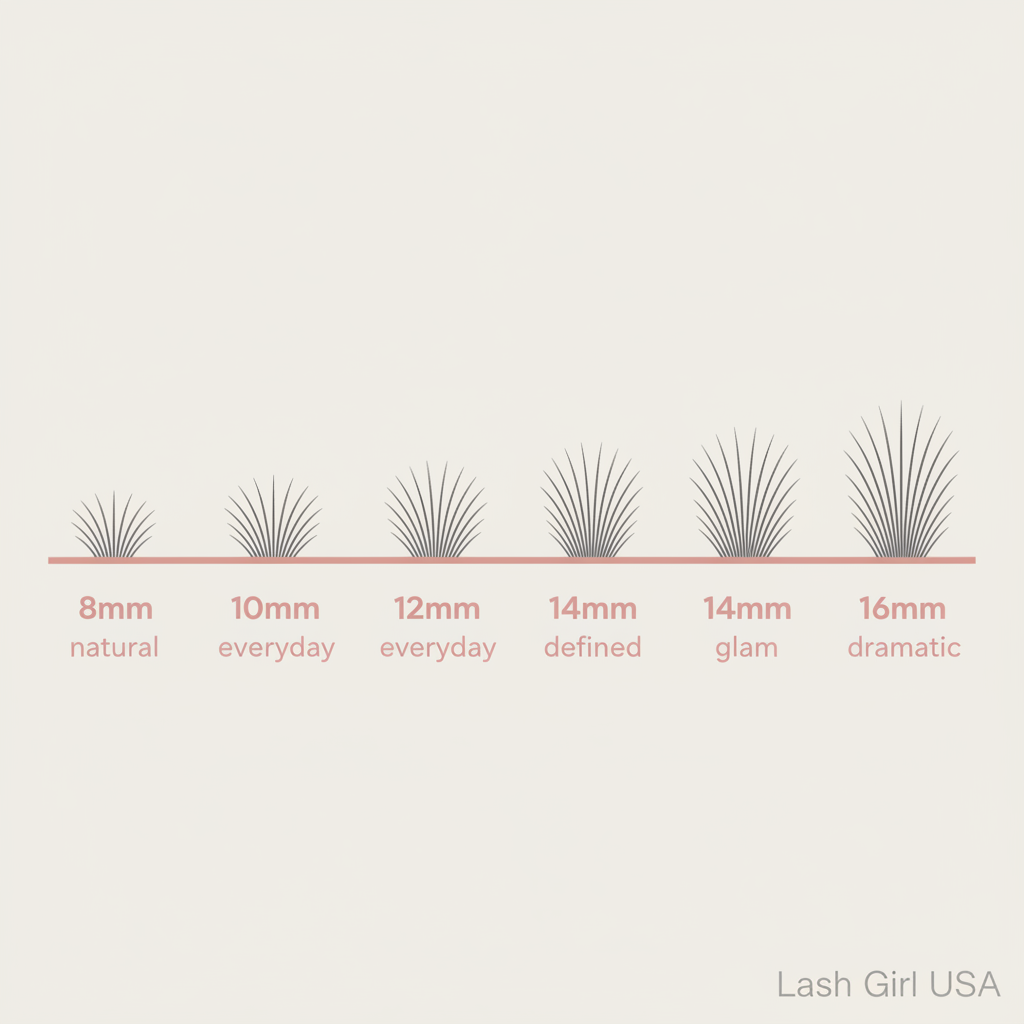
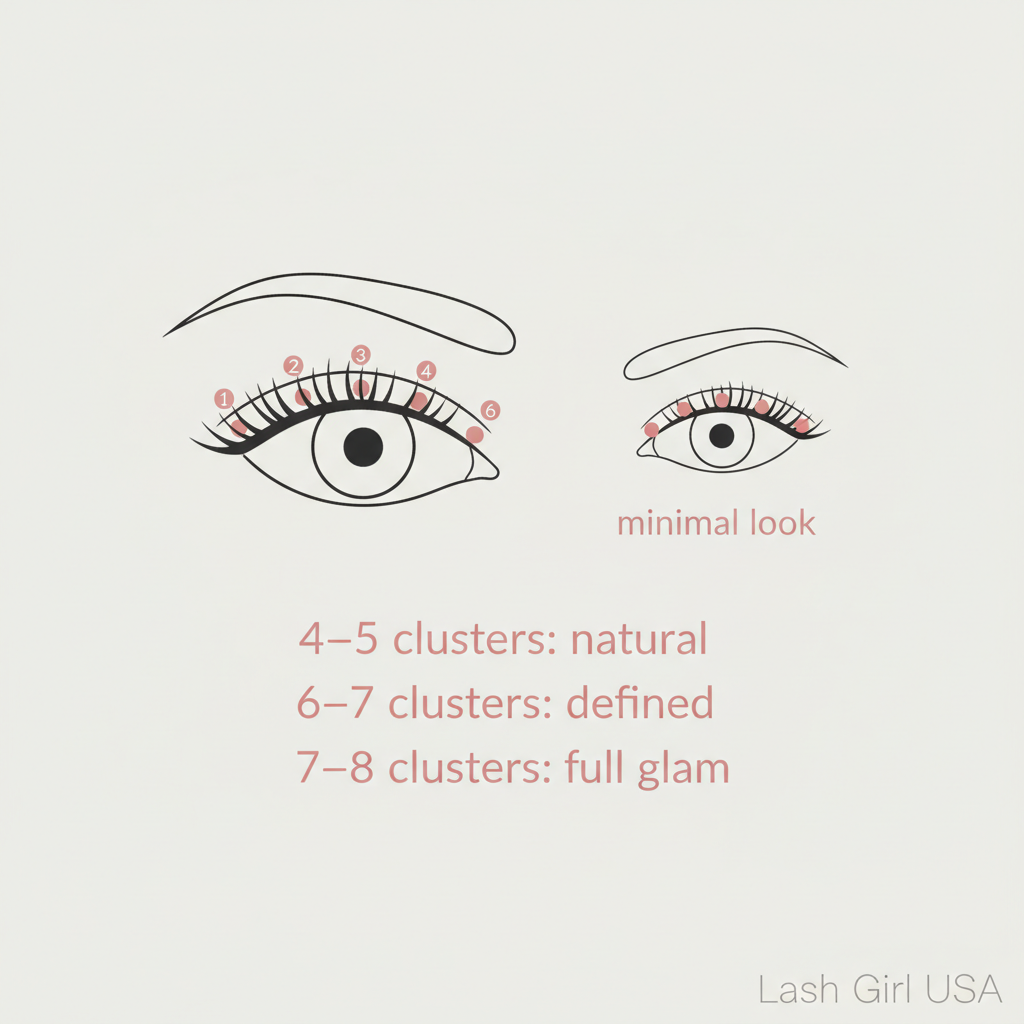
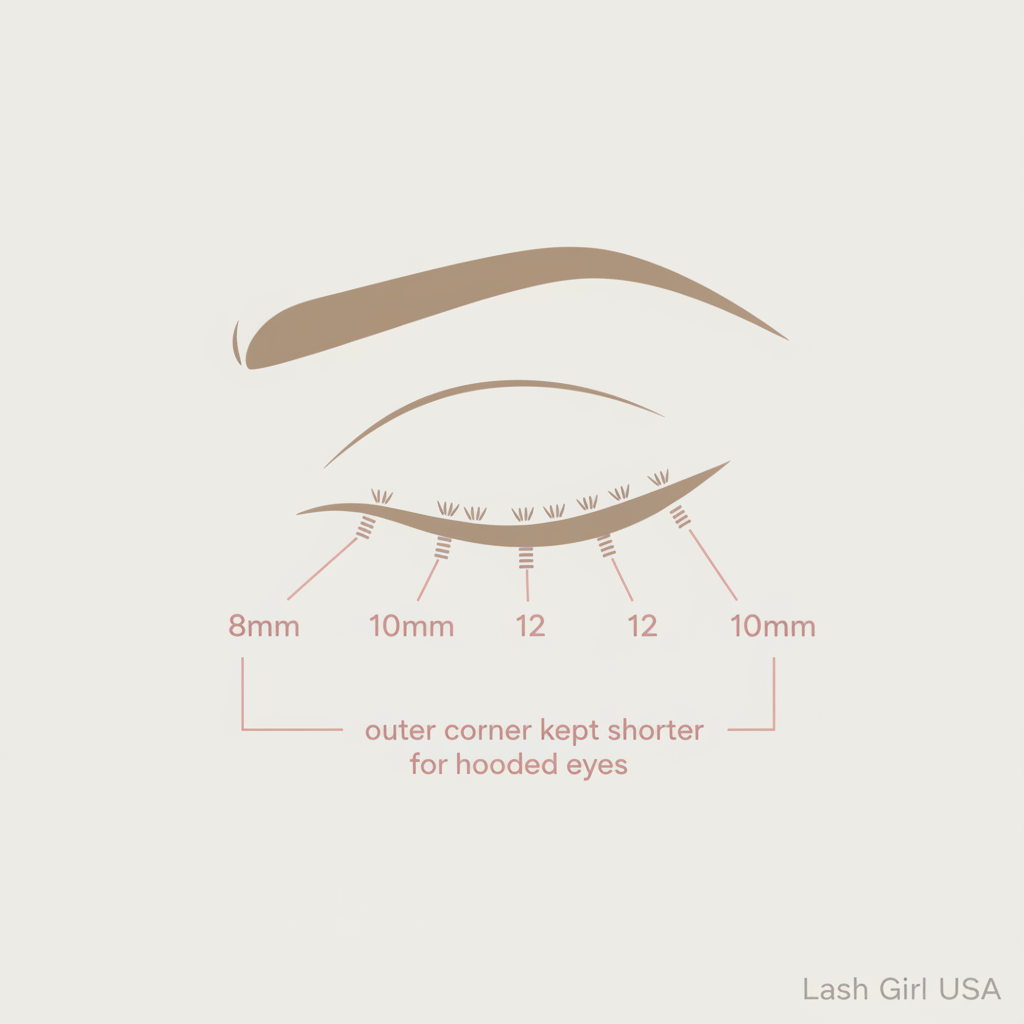
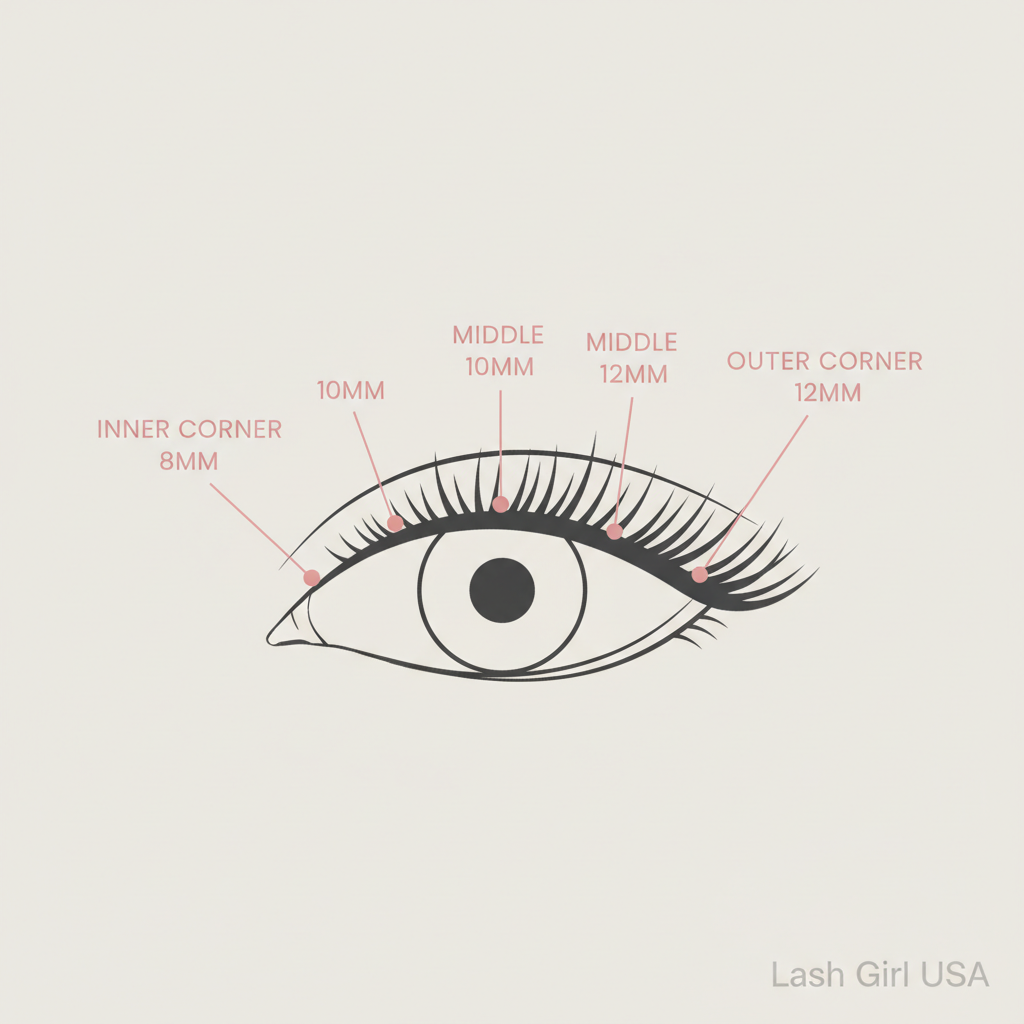
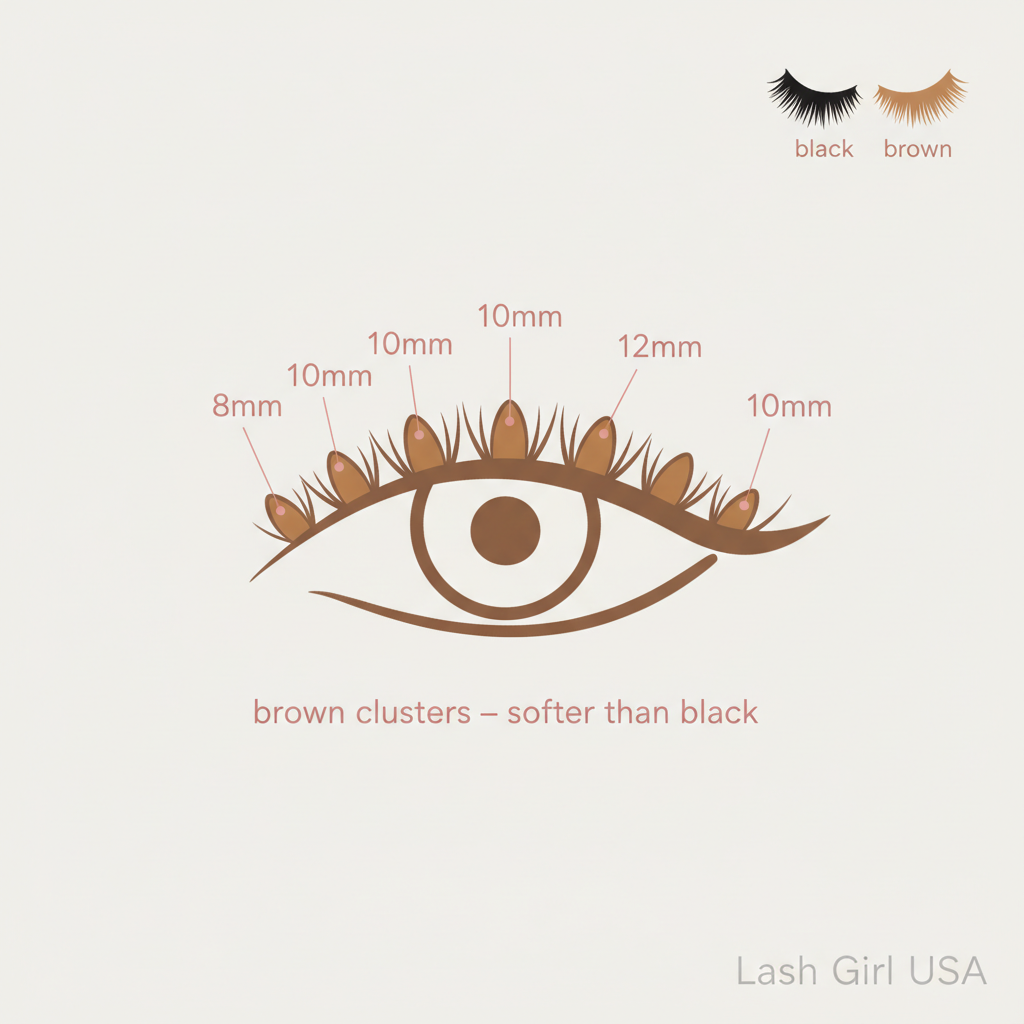
For a natural look with brown clusters, a soft center-weighted map works best: 8mm → 10mm → 10mm → 12mm → 10mm. This map keeps the inner and outer corners soft and short, with the slight length increase in the center adding just enough definition to look intentional. The 12mm center cluster is the focal point — it creates a subtle lift at the center of the eye without adding drama at the outer corner. For an even softer look, replace the 12mm with a 10mm and use 8mm → 10mm → 10mm → 10mm → 8mm across the full lash line. This is the most natural-looking map possible with clusters and works well for first-time wearers or anyone who wants the most understated result.
Pro tip: With brown clusters, you can often use one more cluster than you would with black without the look feeling overdone. The softer color is more forgiving of slightly denser coverage.
Pairing brown clusters with makeup
No eye makeup: Brown clusters work beautifully on a completely bare eye. They add definition without requiring liner, shadow, or mascara to look finished. This is one of their biggest advantages over black clusters, which can look slightly unfinished on a bare eye. Brown eyeliner: A thin line of brown eyeliner along the upper lash line before applying clusters creates a seamless base that makes the clusters look like they're growing from your lash line. Use a pencil or gel liner in a warm brown shade. Brown or taupe eyeshadow: A soft wash of brown or taupe shadow on the lid complements brown clusters without competing with them. Avoid dark or smoky shadows — they'll overpower the softness of the brown clusters. Mascara: If you want to blend your natural lashes with the clusters, a brown mascara on your natural lashes before applying clusters creates a more seamless transition than black mascara.
Pro tip: Skip mascara on top of brown clusters — it darkens them toward black and defeats the purpose of choosing brown. If you want more definition, add a second cluster instead.
Where to find brown cluster lashes

Brown cluster lashes are less widely stocked than black, but most major cluster lash brands offer at least one brown shade. Look for descriptors like "brown", "dark brown", "espresso", "mocha", or "brunette" in the product name or color description. Espresso and dark brown shades are the most versatile — they read as brown in daylight but have enough depth to look intentional in all lighting conditions. Very light brown shades can look washed out in photos or dim lighting, so they're better suited to very fair skin tones or very natural looks. If you can't find brown clusters locally, they're widely available online. Check the brand's full color range rather than just what's on the shelf — brown is often a secondary color that isn't always displayed prominently in stores.
Pro tip: If you're ordering online and unsure which brown shade to choose, espresso or dark brown is the safest starting point. It's versatile enough for most skin tones and lighting conditions.
When to choose black instead
Brown clusters aren't the right choice for every situation. Black clusters are better when: you have a deeper skin tone where brown clusters may not show up with enough definition; you're wearing a full eye makeup look with liner and shadow where the contrast of black clusters reads better; you want a glam or dramatic look — brown clusters are inherently soft and don't translate as well to high-impact looks; you're wearing the look for photos or video where brown clusters can look less defined than they do in person. The simplest rule: if you want the look to read as natural and effortless, brown clusters. If you want the look to read as intentionally done, black clusters.
Pro tip: You don't have to choose one or the other permanently. Many people keep both on hand and choose based on the occasion — brown for everyday, black for events.
Frequently asked questions
Do brown lash clusters look natural?
Yes — brown clusters are specifically chosen for their natural appearance. They create a softer, less contrasted lash line than black clusters, which makes them look more like enhanced natural lashes than added ones. They work especially well on fair skin tones, warm undertones, and people with naturally brown or auburn lashes.
Can people with dark skin tones wear brown clusters?
They can, but the effect is different. On deeper skin tones, brown clusters may not create enough contrast to show up with clear definition. Dark brown or espresso shades tend to work better than medium brown on deeper skin tones. If definition is the goal, black clusters usually read better.
Should I use brown mascara with brown clusters?
If you want to blend your natural lashes with the clusters before applying, a brown mascara on your natural lashes creates a more seamless transition. Avoid applying mascara on top of the clusters themselves — it darkens them and changes the color you chose them for.
Are brown clusters harder to apply than black?
No — the application process is identical. The only difference is the color. Brown clusters can actually be slightly more forgiving of small placement errors because the softer color draws less attention to the lash line than black.
Lash Girl USA creates beginner-focused guides about DIY lash clusters, application techniques, tools, styles, retention, and product selection.