Removing cluster lashes incorrectly is one of the most common ways people damage their natural lashes. The clusters themselves aren't the problem — it's the pulling, peeling, and dry-tugging that causes breakage and premature shedding. Done right, removal takes about five minutes and leaves your natural lashes completely intact. This guide walks you through the safest method, what products to use, and the mistakes that cause the most damage so you can avoid them.
Why removal technique matters

Cluster lashes bond to your natural lashes using lash adhesive — the same type of bond used in professional lash extensions, just applied at home. That bond is designed to hold through water, sweat, and daily movement, which means it doesn't release on its own without help. When you try to pull or peel a cluster off without breaking down the adhesive first, you're not just removing the cluster — you're pulling against the bond, which can take natural lashes with it. Natural lashes that are pulled out prematurely don't grow back immediately; they restart their growth cycle from scratch, which can leave gaps for weeks. The good news is that the same bond that holds clusters firmly also dissolves quickly with the right remover.
Pro tip: Never remove clusters when you're in a hurry. Rushed removal is the number one cause of natural lash damage. Give yourself at least five minutes and good lighting.
What you need for safe removal

Oil-based makeup remover or micellar water: Oil breaks down lash adhesive effectively and is gentle on the eye area. Look for a remover that lists an oil (such as mineral oil, coconut oil, or sweet almond oil) as one of the first ingredients. Dedicated lash bond removers also work well and are formulated specifically for this purpose. Cotton pads or rounds: Use soft, lint-free pads to apply the remover. Avoid cotton balls — the fibers can catch on clusters and cause tugging. A clean spoolie or soft lash brush: Useful for gently working remover through the lash line. Tweezers (optional): For gently sliding off clusters once the bond has softened — not for pulling. What to avoid: Waterproof makeup remover wipes (too dry and abrasive), rubbing alcohol (dries out lashes), and any product with acetone.
Pro tip: If you don't have a dedicated lash remover, pure coconut oil or sweet almond oil applied with a cotton pad works well and is gentle enough for daily use.
Step-by-step removal method

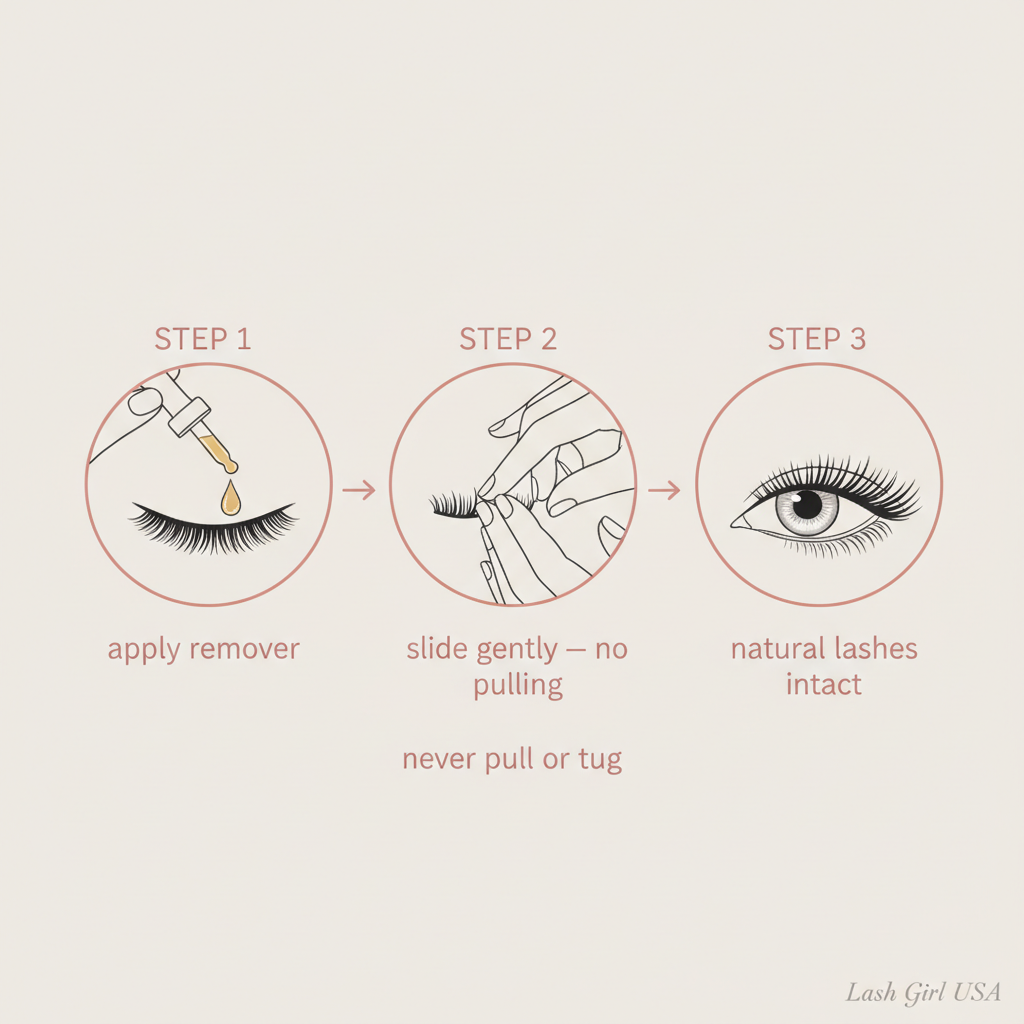
Step 1 — Saturate a cotton pad with your oil-based remover. You want it damp, not dripping. Step 2 — Hold the pad gently against your closed eye for 20–30 seconds. This gives the oil time to start breaking down the adhesive bond before you do anything else. Step 3 — With the pad still in place, gently press it along the lash line and move it slowly from inner to outer corner. Don't rub — use a gentle pressing and sliding motion. Step 4 — After 30–60 seconds of contact, try gently sliding one cluster toward the outer corner using your fingertip or the flat side of tweezers. If it moves easily, continue with the rest. If it resists, apply more remover and wait another 30 seconds. Step 5 — Once all clusters are off, cleanse the eye area with a gentle cleanser to remove any remaining adhesive or oil residue.
Pro tip: Work on one eye at a time. Keeping the other eye dry while you remove the first prevents remover from running into your open eye.
How to handle stubborn clusters
Occasionally a cluster will feel firmly bonded even after applying remover. This usually means the adhesive was applied generously or the cluster has been worn for several days and the bond has fully cured. Don't force it. Apply a fresh layer of remover directly to the base of that specific cluster and wait a full minute before trying again. You can also try holding a remover-soaked pad against just that cluster for 30–45 seconds of focused contact. If the cluster still won't release after two rounds of remover, leave it and try again the next day after a shower — steam and warm water help soften the bond further. Forcing a stubborn cluster is never worth the risk of pulling natural lashes.
Pro tip: A warm (not hot) shower before removal softens the adhesive significantly and makes the whole process faster and easier. If you have time, shower first.
Caring for your natural lashes after removal

After removal, your natural lashes may look slightly sparse or flat — this is normal and temporary. The clusters were adding volume and length, so their absence is noticeable at first. A few things help your natural lashes recover and stay healthy between wears. Cleanse gently: Use a gentle, oil-free cleanser on the lash line to remove any adhesive residue. Residue left on the lashes can cause stiffness and breakage. Condition: Apply a small amount of lash serum or castor oil to the lash line before bed. This nourishes the lash follicle and supports healthy growth. Give them a break: If you wear clusters frequently, take at least one or two days off between applications. Continuous wear without breaks can stress the natural lashes over time. Avoid rubbing: Your lashes are slightly more vulnerable right after removal. Avoid rubbing your eyes for the rest of the day.
Pro tip: Keep a lash serum or conditioning oil on your nightstand as a reminder to apply it on nights when you're not wearing clusters. Consistent conditioning makes a noticeable difference over time.
Mistakes that damage natural lashes
Dry pulling: Trying to remove clusters without any remover is the most damaging thing you can do. Even if a cluster feels loose, always use remover first. Peeling from the outer corner: Peeling a cluster off like a sticker — starting from the outer edge and pulling inward — puts direct tension on the natural lashes it's bonded to. Always slide clusters off rather than peeling them. Rubbing with a dry cloth: Rubbing the eye area with a dry towel or wipe to remove clusters creates friction that can break natural lashes. Using acetone or alcohol: These dissolve adhesive but are far too harsh for the delicate eye area and can cause dryness, irritation, and lash damage. Removing too quickly: Rushing through removal without giving the remover enough contact time is the second most common cause of damage after dry pulling.
Pro tip: If you notice more natural lashes than usual coming off with your clusters, it's almost always a removal technique issue rather than a product issue. Slow down and add more remover contact time.
Frequently asked questions
Will cluster lashes damage my natural lashes?
Not if they're applied and removed correctly. The most common cause of natural lash damage is improper removal — specifically dry pulling or peeling clusters off without breaking down the adhesive first. Using an oil-based remover and sliding clusters off gently leaves natural lashes intact.
How long should I leave remover on before removing clusters?
At least 30–60 seconds of contact time before you try to slide any cluster off. For stubborn clusters or those worn for several days, a full minute of focused contact — or a warm shower beforehand — makes removal significantly easier.
Can I sleep in cluster lashes and remove them in the morning?
Most cluster lash systems are designed for multi-day wear, so sleeping in them is generally fine. However, sleeping face-down can cause clusters to shift or lift overnight. Remove and reapply if you notice significant movement after sleeping.
What's the best remover to use?
An oil-based makeup remover, dedicated lash bond remover, or pure oil (coconut, sweet almond, or mineral oil) all work well. Avoid anything with acetone, alcohol, or harsh surfactants. If you're unsure, pure coconut oil is a gentle and widely available option.
Safety note: Eye-area products can cause irritation or allergic reactions in some people. Follow the manufacturer's directions, avoid applying adhesive directly to the eye or waterline, discontinue use if irritation occurs, and seek appropriate medical care for persistent or severe symptoms.
Lash Girl USA creates beginner-focused guides about DIY lash clusters, application techniques, tools, styles, retention, and product selection.