One of the most common questions beginners ask is how many clusters to use per eye. It's a fair question — the answer isn't a single number, and most packaging doesn't give you much guidance. Use too few and the look feels patchy or unfinished. Use too many and the lashes start to look heavy, unnatural, or costume-y. The right number depends on your eye size, your natural lash density, the cluster lengths you're using, and the look you're going for. This guide walks you through how to figure out your number and how to adjust it as you get more comfortable.
Why there's no single right answer

Cluster count is personal because eye sizes vary significantly. Someone with a wide, almond-shaped eye has more lash line to cover than someone with a smaller, rounder eye. Longer clusters also take up more visual space than shorter ones, so a 6-cluster look with 14mm clusters reads very differently from a 6-cluster look with 10mm clusters. The goal isn't a specific number — it's full, even coverage along your lash line without gaps or overcrowding. Once you understand that, the number becomes a starting point you adjust rather than a rule you follow.
Pro tip: Lay your clusters out on a clean surface before you start. Seeing them all at once helps you plan coverage before any glue is involved.
Starting ranges by look

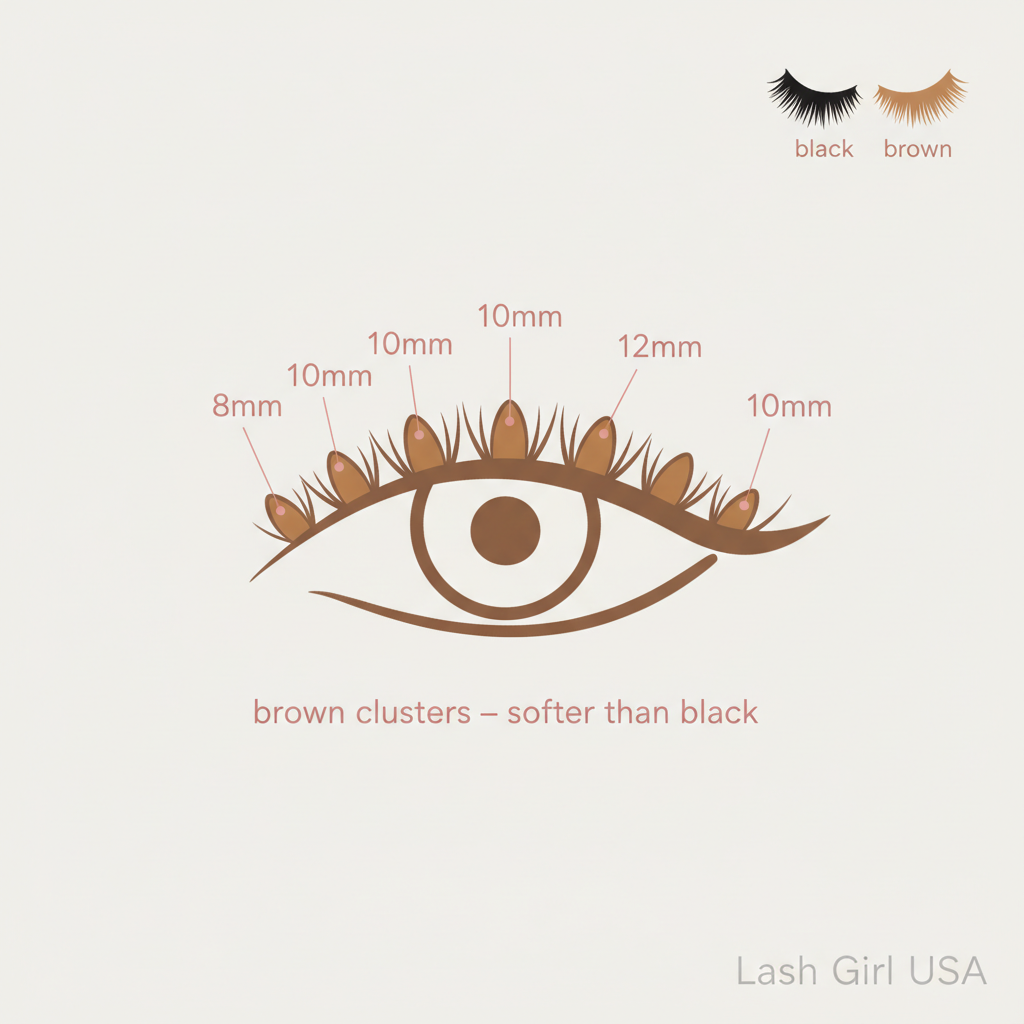
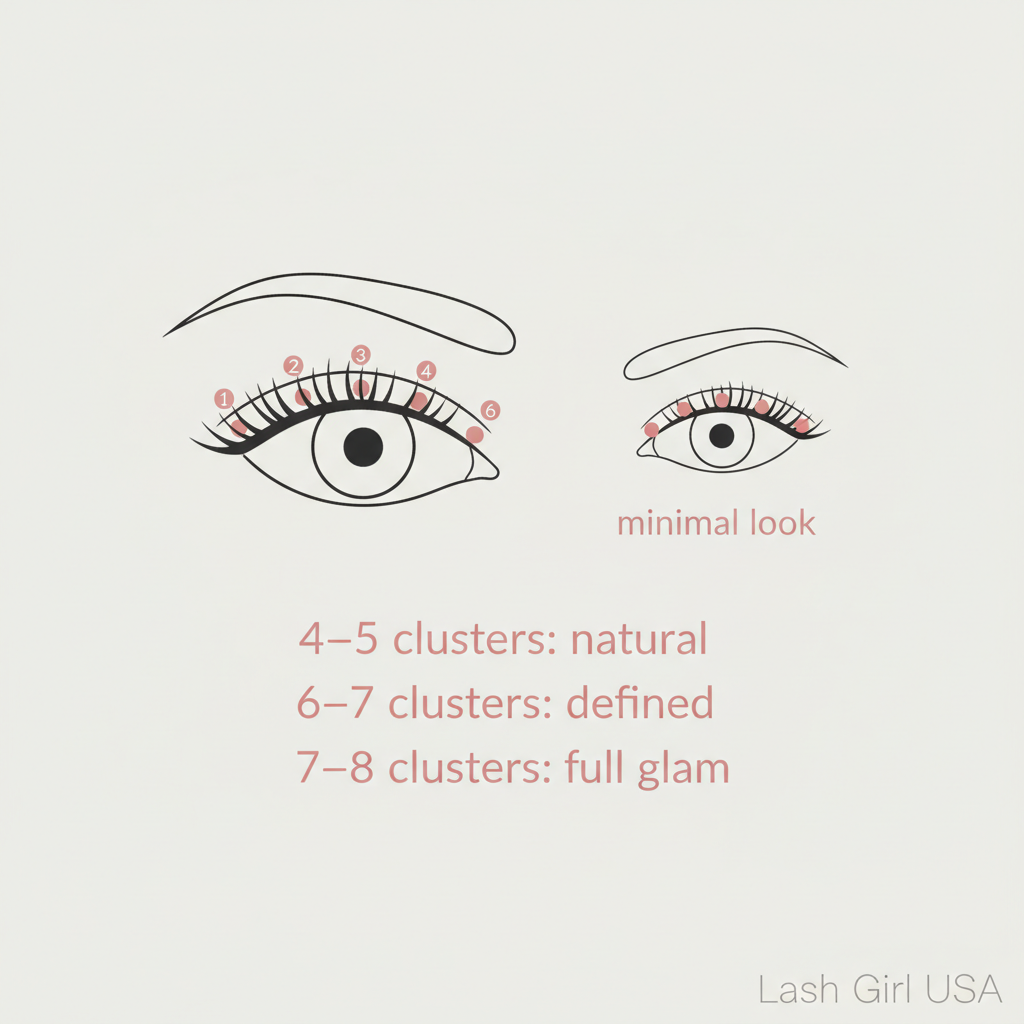
Here are general starting ranges based on the look you want. Natural (barely-there): 4–5 clusters per eye. These are spaced slightly apart and sit mostly in the center and outer lash line. The goal is enhancement, not coverage. Defined (everyday wear): 5–6 clusters per eye. This is the most common range for beginners. It gives you noticeable definition without looking overdone. Full (glam or event): 7–8 clusters per eye. At this range you're covering most of the lash line and the look reads as intentionally dramatic. These ranges assume average-sized eyes and medium cluster lengths (10–12mm). Adjust up if you have a longer lash line or are using shorter clusters; adjust down if you have smaller eyes or are using longer clusters.
Pro tip: Start with 5 clusters on your first application. It's easier to add one more than to remove a cluster that's already bonded.
How eye size affects your count

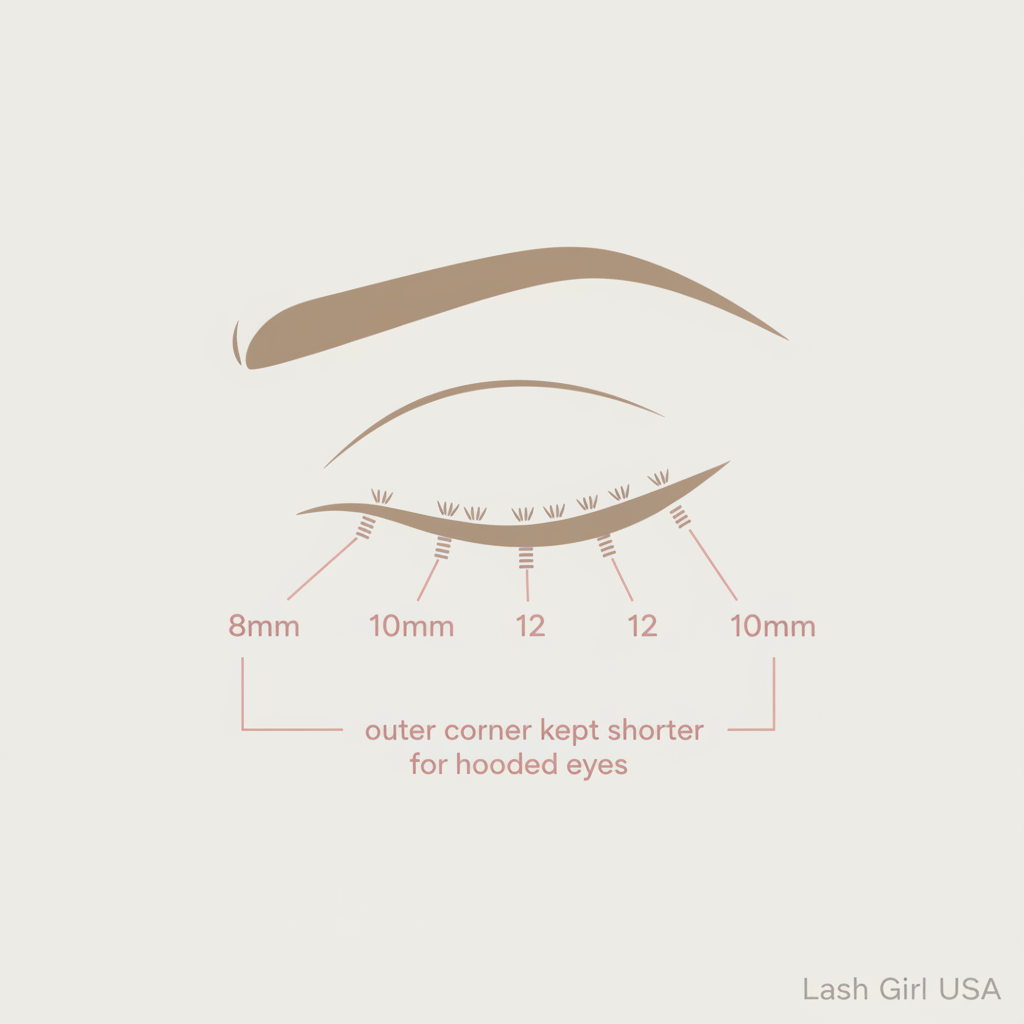
Smaller eyes (shorter lash line): 4–5 clusters is usually enough for a defined look. More than 6 can make the eye look heavy or closed. Stick to shorter lengths (8–10mm) and space clusters evenly rather than packing them in. Average eyes: 5–6 clusters covers most of the lash line comfortably. This is the range most tutorials and product guides are written for. Larger eyes (longer lash line): 6–8 clusters may be needed to avoid a patchy look. With a longer lash line, 5 clusters can look sparse even at medium lengths. If you're unsure which category you fall into, measure your lash line from inner to outer corner. Under 25mm is on the smaller side; 25–30mm is average; over 30mm is longer.
Pro tip: Hold a cluster up to your eye before applying. If there's a visible gap between where one cluster ends and the next would start, you may need one more.
How cluster length affects your count
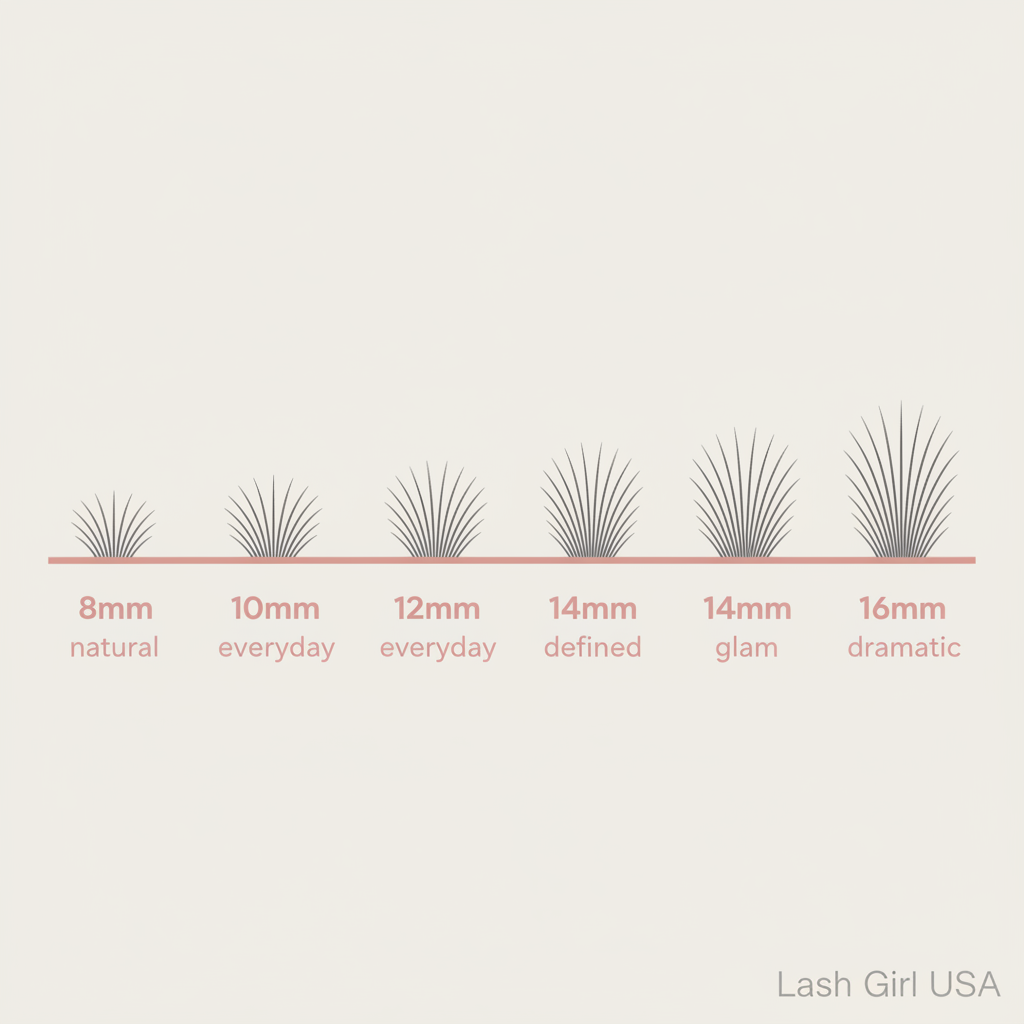
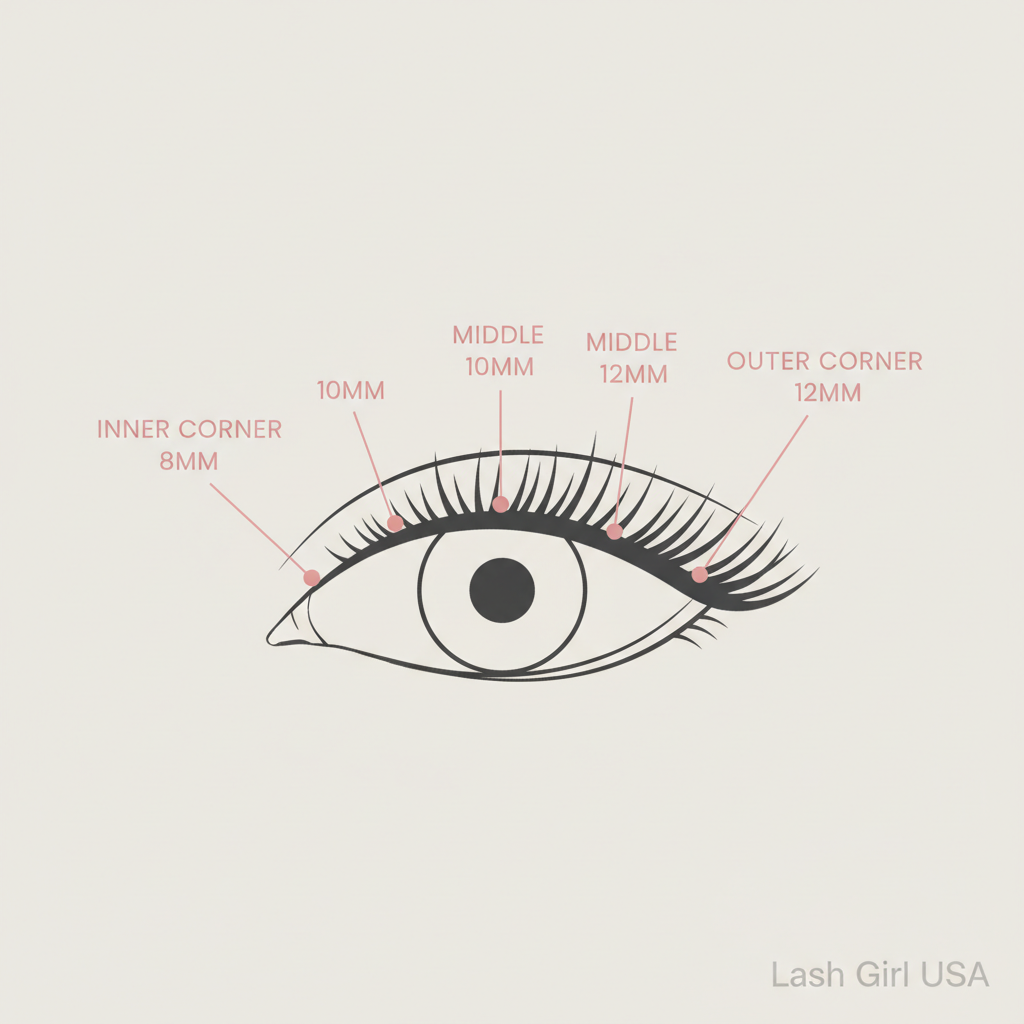
Shorter clusters (8–10mm) are narrower at the base and take up less lash line per cluster. You may need 6–7 to achieve the same coverage that 5 medium-length clusters would give you. Medium clusters (10–12mm) are the most versatile. The ranges in this guide are based on this length. Longer clusters (12mm+) are wider at the base and cover more lash line per cluster. You may find that 5 longer clusters gives you the same coverage as 6–7 shorter ones. This is why cluster count and cluster length always need to be considered together — they're not independent variables.
Pro tip: If you switch to a new brand or length, your usual cluster count may need to change. Give yourself a trial application before a real event.
How to place clusters for even coverage

Even spacing matters as much as count. Here's a simple approach for 5–6 clusters: Start with your center cluster first, placed directly above the center of your iris. Then place one cluster on each side of center, working outward. Finally, add your innermost and outermost clusters. This center-out approach ensures the most visible part of your lash line (the center) is covered first, and you can stop at any point if the look already feels right. For 7–8 clusters, fill in any gaps after the initial 5–6 are placed rather than trying to plan all 8 positions in advance.
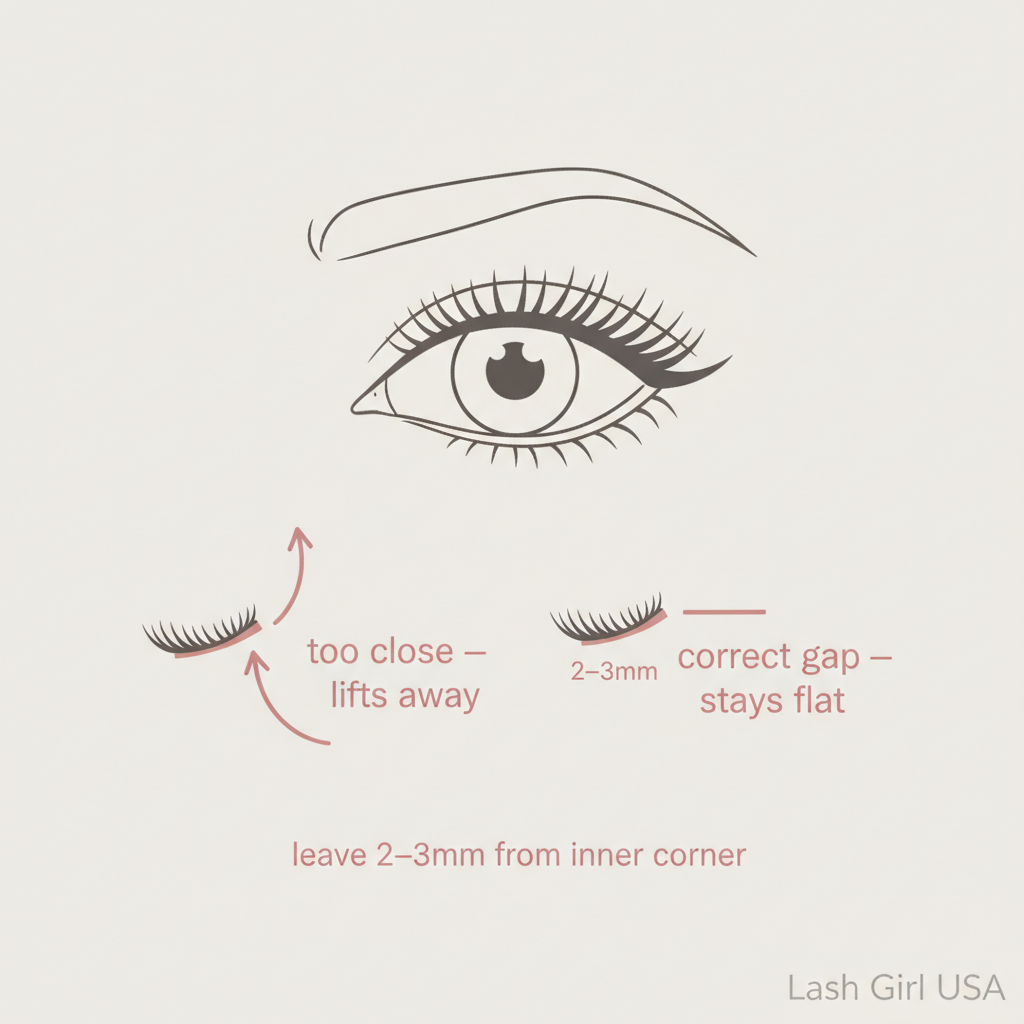
Pro tip: Leave a 2–3mm gap from the very inner corner regardless of how many clusters you're using. Starting too close to the inner corner looks unnatural on most eye shapes.
Signs you've used too many or too few
Too few clusters: Visible gaps between clusters when you look straight ahead. The look feels patchy or unfinished. Your natural lashes are clearly visible between clusters. Fix: add one cluster at a time in the gaps until coverage feels even. Too many clusters: The lash line looks heavy or the eye looks smaller than usual. Clusters are overlapping or touching at the base. The look feels costume-y rather than enhanced. Fix: on your next application, remove one cluster from the outer zone first — that's usually where overcrowding happens. The right number: No visible gaps, no overlapping, and the look feels like an enhanced version of your natural lashes rather than something sitting on top of them.
Pro tip: Take a photo after your first application and zoom in. Photos reveal gaps and overcrowding that are hard to see in a mirror.
Frequently asked questions
How many clusters come in a typical kit?
Most beginner kits include 20–40 clusters per pack, which covers 3–6 full applications depending on how many you use per eye. Some kits are sold by count (e.g. 30 clusters) and others by look (e.g. "natural" or "full glam" sets).
Can I mix cluster counts on each eye?
Yes — if your eyes are slightly different sizes (which is common), using one more cluster on the larger eye is completely normal. The goal is visual symmetry, not identical counts.
Do I need more clusters for a bottom lash look?
Bottom lash clusters are much smaller and you typically use 3–5 per eye depending on the look. They're applied separately from upper clusters and follow their own placement logic.
What if I run out of clusters mid-application?
Finish the eye you're working on first using what you have, then assess whether the look is even enough to wear as-is. An unfinished eye looks more uneven than a slightly sparse one. Keep a backup pack on hand once you know your preferred count.
Safety note: Eye-area products can cause irritation or allergic reactions in some people. Follow the manufacturer's directions, avoid applying adhesive directly to the eye or waterline, discontinue use if irritation occurs, and seek appropriate medical care for persistent or severe symptoms.
Lash Girl USA creates beginner-focused guides about DIY lash clusters, application techniques, tools, styles, retention, and product selection.