
Nothing is more frustrating than spending time on a lash look only to have a cluster peel off two hours later. The good news: it's almost never bad luck. There are five specific reasons clusters fall off, and every single one is fixable. Let's go through them one by one.
Your lashes weren't clean enough

This is the number one reason clusters fail. Any oil, residue, or old mascara on your natural lashes creates a barrier between the adhesive and your lash. The glue bonds to the residue instead of your lash, and when the residue breaks down throughout the day, the cluster comes with it. Clean your lashes with an oil-free micellar water or lash cleanser before every application, and let them dry completely.
Pro tip: Even if you didn't wear makeup that day, your lashes still have natural oils on them. A quick cleanse before application makes a real difference.
You didn't wait for the glue to get tacky

Applying a cluster the second you put glue on it is one of the most common beginner mistakes. Fresh glue is too wet to grip — it slides around and doesn't bond properly. You need to wait 20–30 seconds after applying the adhesive for it to become tacky. It should look slightly clear and feel slightly sticky when you lightly touch it with a fingertip. That's your window.
Pro tip: If you're working in a humid environment, give the glue an extra 10 seconds. Humidity slows the drying process.
You used too much glue

More glue does not mean better hold. A thick application takes much longer to dry, is harder to control, and often ends up on your skin instead of your lash line — which means the cluster is bonded to your skin, not your lashes. When your skin moves, the cluster moves with it and eventually peels off. A thin, even coat along the band is all you need.
Pro tip: If you see white glue residue on your lashes after the cluster is placed, you used too much. Wipe the excess off with a clean cotton swab before it dries.
The cluster is touching your skin
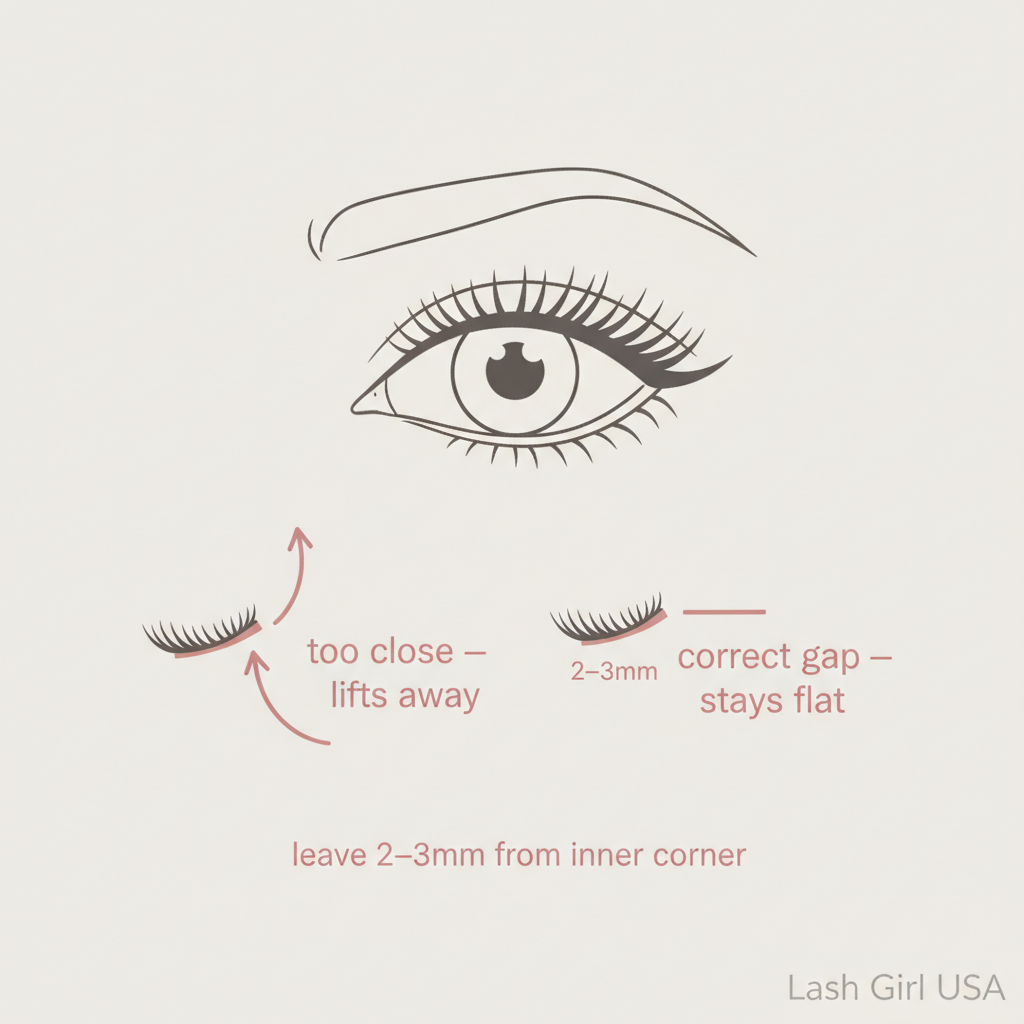
Clusters should bond to your natural lashes, not your skin. When a cluster sits on your eyelid, the natural movement of your skin throughout the day works against the adhesive. Place clusters as close to the lash line as possible, but on top of your lashes — not on the skin beneath them. This takes practice, but it's the difference between a look that lasts all day and one that falls apart by noon.
Pro tip: Looking down into a mirror rather than straight ahead gives you a better angle on your lash line and makes precise placement much easier.
Your glue has expired or degraded

Lash adhesive has a shelf life, and once it starts to degrade, it loses its holding power significantly. If your glue has been open for more than three months, or if it's gone stringy, changed color, or smells off, it's time to replace it. Storing glue in a hot car or bathroom (where humidity is high) also degrades it faster. Keep it in a cool, dry place with the cap on tight.
Pro tip: Write the date you opened your glue on the tube with a marker. Three months is the general rule for open adhesive.
Safety note: Eye-area products can cause irritation or allergic reactions in some people. Follow the manufacturer's directions, avoid applying adhesive directly to the eye or waterline, discontinue use if irritation occurs, and seek appropriate medical care for persistent or severe symptoms.
Lash Girl USA creates beginner-focused guides about DIY lash clusters, application techniques, tools, styles, retention, and product selection.